In-Home Physiotherapy
Back2You Therapy provides physiotherapy in your home and community for people who need support with walking, balance, transfers, strength, mobility and physical rehabilitation.
Our physiotherapists work with NDIS participants, adults, children and older people living with neurological conditions, physical disability or changes in function.
What Do You Need Support With?
Assessment and rehabilitation for changes in walking and mobility.
Support with standing, bed mobility and moving between chairs, wheelchairs and other surfaces.
Physiotherapy for reduced balance, falls risk and confidence with movement.
Exercise based on the strength and physical capacity needed for everyday activities.
Rehabilitation for conditions affecting movement, balance, coordination and physical function.
Task-specific movement practice for appropriate neurological and spinal cord injury presentations.
Support with propulsion, transfers, endurance and functional wheelchair use.
Ongoing physiotherapy following hospitalisation, illness, surgery or inpatient rehabilitation.
Physiotherapy Starts With How You Need to Move
Physiotherapy is not simply a program of exercises.
We look at the movements and activities that are becoming difficult, identify what is limiting them and work on the physical capacity required to perform them.
That may involve:
Treatment is based on the person’s current function, health condition and goals.
- getting out of bed
- standing from a chair
- transferring between a wheelchair and another surface
- walking safely through the home
- managing stairs
- improving balance
- reducing falls risk
- rebuilding strength after hospitalisation
- improving walking tolerance
- maintaining mobility with a neurological condition
- improving wheelchair mobility
- building the endurance required for everyday activities
Assess Movement in the Environment Where You Use It
Some movement problems are difficult to understand properly inside a clinic.
A person may stand easily from a treatment table but struggle to get out of their own bed.
They may walk confidently on a flat clinic floor but have difficulty with the step at their front door.
A wheelchair user may need to practise turning, transferring or moving through the spaces they actually use every day.
In-home physiotherapy allows the therapist to assess the person, the movement and the environment together.
Our mobile physiotherapy service brings assessment and rehabilitation into the spaces you use every day.
Real Transfers
Work with the actual bed, chair, toilet or wheelchair involved in the difficulty.
Real Walking Environments
Assess hallways, stairs, entrances and surfaces used every day.
Existing Equipment
Review how walking aids, wheelchairs and other equipment are being used.
Carer & Support Worker Involvement
Where relevant, carers or support workers can be included in agreed movement and transfer strategies.
Physiotherapy for NDIS Participants
Back2You Therapy works with self-managed, plan-managed and agency-managed participants who require physiotherapy because their disability affects movement or physical function.
NDIS physiotherapy may include:
With participant consent, our physiotherapists can also communicate with support coordinators, families and other treating professionals.
- mobility assessment
- walking and gait rehabilitation
- balance training
- falls prevention
- transfer practice
- bed mobility
- strength and conditioning
- neurological rehabilitation
- activity-based therapy
- wheelchair mobility
- physical endurance
- home exercise programs
- progress reviews
- physiotherapy reports and recommendations
Physiotherapy for Changes in Walking
Walking can be affected by weakness, reduced balance, pain, fatigue, neurological changes or a period of inactivity.
A physiotherapy assessment may look at:
- walking pattern
- step length
- foot clearance
- walking speed
- turning
- balance while walking
- stairs
- walking aids
- uneven surfaces
- endurance
- confidence with mobility
Treatment may combine specific exercises with practice of the walking tasks that matter to the person.
The focus is not simply on “walking better”. It may be being able to reach the bathroom safely, walk to the car, move around the home with less assistance or maintain mobility as a condition changes.
Practise the Movements You Use Every Day
Transfers are often one of the most important areas of physiotherapy for people living with physical or neurological disability.
Depending on the person’s needs, therapy may address:
- sit-to-stand
- getting in and out of bed
- rolling and repositioning in bed
- bed-to-wheelchair transfers
- wheelchair-to-chair transfers
- toilet transfers
- shower transfers
- vehicle transfers where appropriate
- floor transfers where clinically appropriate
The physiotherapist considers strength, balance, movement technique, fatigue, available assistance and the surfaces involved.
Where equipment or environmental changes are required, physiotherapy can be coordinated with occupational therapy.
Understand Why Falls Are Happening
Falls can be related to more than balance alone.
A physiotherapy assessment may consider:
- standing balance
- balance while walking
- turning
- lower-limb strength
- walking aids
- fatigue
- reaction to loss of balance
- confidence after a fall
- neurological changes
- previous falls and near-falls
Treatment is then directed towards the factors contributing to the person’s falls risk.
For older adults, this may also be coordinated with occupational therapy where home safety or equipment is contributing to the problem.
Build Strength for the Activities That Require It
Strength training is most useful when it connects to something the person needs to do.
That might be:
- standing from a chair
- completing a transfer
- walking further
- climbing stairs
- propelling a wheelchair
- maintaining standing
- returning to activity after hospitalisation
- improving physical endurance
- maintaining function with a progressive condition
Programs are adapted to the person’s current capacity, diagnosis, fatigue and functional goals.
Repeated Practice of Meaningful Movement
Activity-based therapy uses repeated, task-specific movement to work towards functional goals.
Depending on the person’s condition and abilities, sessions may include:
- standing
- stepping
- reaching
- weight-bearing
- transfers
- upper-limb activity
- lower-limb activity
- balance tasks
- walking practice
- strength and conditioning
- complete functional movements
This approach may form part of rehabilitation for people living with spinal cord injury, stroke, acquired brain injury and other neurological conditions.
Build the Physical Skills Required for Wheelchair Use
For people who use a manual or powered wheelchair, physiotherapy may address the physical demands associated with mobility and transfers.
Depending on the participant, this may include:
- propulsion
- turning
- ramps
- uneven surfaces
- transfer ability
- upper-limb strength
- physical endurance
- movement required for pressure relief
- functional wheelchair use in the home or community
Where wheelchair prescription, seating or positioning is involved, our physiotherapists can work alongside occupational therapy.
Physiotherapy for Neurological Conditions
Neurological conditions can affect walking, strength, balance, muscle tone, coordination, endurance and the way movement is controlled.
Back2You Therapy provides physiotherapy for people living with neurological and progressive conditions, including:
Support with walking, balance, strength, fatigue and maintaining physical capacity.
Physiotherapy for gait, balance, transfers, movement strategies, strength and physical conditioning.
Rehabilitation for walking, balance, transfers, strength and functional movement following stroke.
Activity-based therapy, transfers, wheelchair mobility, strength and physical conditioning.
Support for mobility, transfers, fatigue, positioning and maintaining safe movement as physical needs change.
Acquired Brain Injury
Physiotherapy for mobility, balance, coordination and physical rehabilitation following brain injury.
Physiotherapy for mobility, strength, balance, physical conditioning and functional movement.
Physiotherapy After Hospital or Inpatient Rehabilitation
Leaving hospital does not always mean rehabilitation is finished.
Illness, surgery or a prolonged hospital stay can reduce strength, endurance, walking ability and confidence with everyday movement.
In-home physiotherapy may help with:
Working in the home allows rehabilitation to focus directly on the movements required after discharge.
- rebuilding walking tolerance
- regaining strength
- transfers
- stairs
- balance
- reduced endurance
- adapting to new mobility equipment
- continuing rehabilitation started in hospital
- becoming more confident moving around the home
- walking
- falls
- balance
- reduced strength
- transfers
- deconditioning
- physical function after hospitalisation
- exercise tolerance
- confidence with movement
Physiotherapy to Maintain Mobility at Home
Our physiotherapists work with older adults who are experiencing changes in strength, balance or mobility.
Physiotherapy may address:
Where both physical function and the home environment are contributing to difficulties, physiotherapy and occupational therapy can work together.

Physiotherapy-Led Hydrotherapy
Hydrotherapy may form part of a broader physiotherapy program for clients who can benefit from movement and exercise in water.
Sessions may focus on:
- walking
- mobility
- balance
- strength
- endurance
- controlled movement
- functional exercise
Hydrotherapy is a separate Back2You service and should be used where it is appropriate to the person’s rehabilitation goals.
Supporting Movement and Physical Development
Back2You Therapy also provides physiotherapy for children and adolescents.
Depending on the child’s needs, physiotherapy may address:
- gross motor development
- walking
- strength
- balance
- coordination
- mobility
- physical disability
- neurological conditions
- participation in everyday activities
Clear Physiotherapy Referrals and Communication
Back2You Therapy accepts physiotherapy referrals from NDIS participants, support coordinators, families, care managers and health professionals.
Referral Review
We review the reason for referral, participant location, funding, relevant medical information and the physiotherapy support requested.
Clinician Matching
Where possible, referrals are matched with a physiotherapist whose experience is relevant to the participant’s needs.
Functional Goals
Therapy goals focus on measurable movement and functional outcomes rather than broad statements such as “improve mobility”.
Reporting
Where required, physiotherapy reports can document current function, progress, barriers and recommendations.
Coordination
With consent, our physiotherapists can communicate with occupational therapists, support coordinators, families and other treating clinicians.
Start With What Is Becoming Difficult
Your first home visit physiotherapy appointment focuses on your current function, priorities and the movements that matter to you.
Discuss the Referral
Your physiotherapist reviews the reason for referral, diagnosis, recent changes, current supports and priorities.
Assess Movement
Depending on the referral, this may include:
- walking
- transfers
- balance
- strength
- posture
- endurance
- wheelchair mobility
- functional movement
Look at the Environment
Where relevant, the therapist considers stairs, bed height, chairs, walking surfaces, equipment and other environmental factors affecting movement.
Set Specific Goals
Goals might include:
- standing from a chair with less assistance
- completing a safer transfer
- walking to the front door
- reducing falls
- increasing walking tolerance
- improving wheelchair mobility
Develop the Treatment Plan
Your physiotherapist explains the treatment, exercise or activity-based rehabilitation recommended.
Review Progress
The program is adjusted as function, goals and physical capacity change.
When Both Physio and OT Are Needed
Some functional problems require input from both disciplines.
Physiotherapy
Assessment of strength, balance and transfer technique.
Occupational Therapy
Assessment of the bathroom layout, equipment and transfer environment.
Physiotherapy
Wheelchair mobility, transfers and physical conditioning.
Occupational Therapy
Seating, positioning, equipment and home access.
When both services are involved, clinicians can coordinate around the same functional priorities.
Meet the Back2You Physiotherapy Team
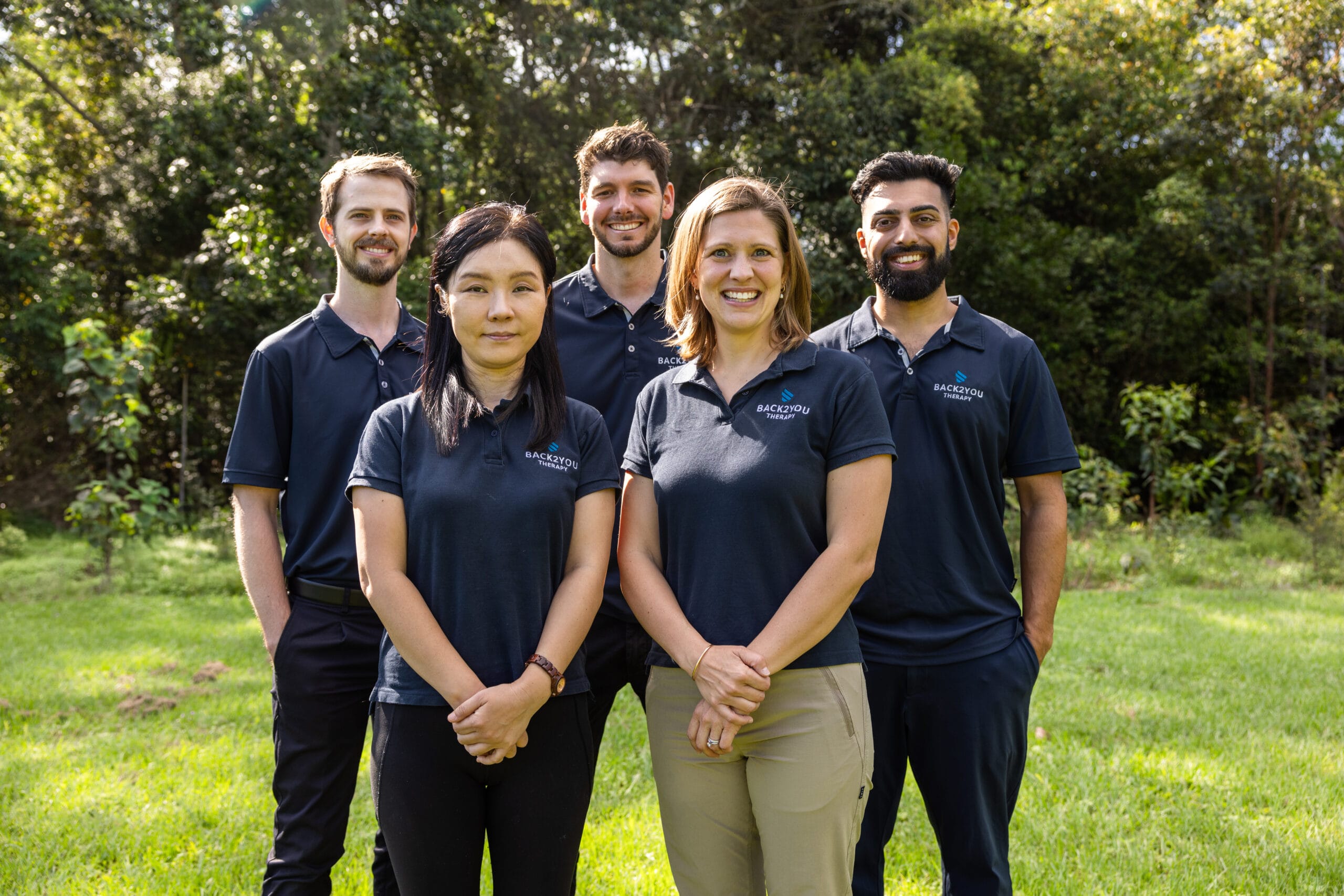
Back2You Therapy’s physiotherapy team includes senior and community physiotherapists working across disability, neurological rehabilitation, hydrotherapy, mobility and in-home rehabilitation.

Director & Senior Physiotherapist
- Neurological rehabilitation
- Disability physiotherapy
- Exercise and aquatic physiotherapy

Senior Physiotherapist
- Community physiotherapy
- Rehabilitation guided by client goals
- Participation in daily activities

Senior Physiotherapist
- Neurological and geriatric physiotherapy
- Disability and hydrotherapy
- Complex positioning and pelvic health

Physiotherapist
- Neuromuscular rehabilitation
- Exercise and manual therapy
- Home and community rehabilitation

Physiotherapist
- Community physiotherapy
- Older adults
- Neurological conditions
How Are Your Services Funded?
NDIS
For participants requiring disability-related physiotherapy, rehabilitation and reporting.
Support at Home
For eligible older Australians requiring physiotherapy at home.
Private / Medicare / Health Fund
Private referrals are accepted where appropriate. Medicare or private health eligibility depends on the individual’s circumstances and cover.
Physiotherapy Across South East Queensland
Frequently Asked Questions
What does a physiotherapist help with?
Physiotherapists assess and treat problems affecting movement and physical function. At Back2You this commonly includes walking, balance, transfers, strength, endurance, neurological rehabilitation and mobility.
What happens during an in-home physiotherapy appointment?
The physiotherapist discusses the current difficulty, assesses relevant movements and considers the environment in which those movements happen. Treatment is then based on the person’s functional needs and goals.
Do you provide NDIS physiotherapy?
Yes. Back2You works with self-managed, plan-managed and agency-managed NDIS participants requiring physiotherapy relating to their disability and physical function.
Can physiotherapy help with neurological conditions?
Yes. Back2You provides neurological physiotherapy for conditions including multiple sclerosis, Parkinson’s disease, stroke, spinal cord injury, MND, acquired brain injury and cerebral palsy.
Can physiotherapy help with walking and balance?
Yes. Physiotherapy can assess the factors affecting walking and balance and provide treatment based on the cause and the person’s current ability.
Can you help with transfers?
Yes. Physiotherapy can address movements such as sit-to-stand, bed mobility and transfers between beds, chairs, wheelchairs, toilets and other surfaces.
Do you provide falls prevention physiotherapy?
Yes. A physiotherapist can assess balance, strength, walking and other factors contributing to falls risk and develop an appropriate treatment plan.
Do you provide activity-based therapy?
Yes. Back2You provides task-specific, activity-based rehabilitation where appropriate to the person’s condition, abilities and goals.
Do you work with wheelchair users?
Yes. Physiotherapy may include wheelchair mobility, transfers, physical conditioning and the physical demands associated with wheelchair use.
Can physiotherapy continue after hospital rehabilitation?
Yes. In-home physiotherapy can continue rehabilitation after discharge where the person still requires support with mobility, strength, transfers, balance or physical conditioning.
Do you provide physiotherapy for older adults?
Yes. Back2You provides in-home physiotherapy for older adults, including eligible Support at Home clients.
Is hydrotherapy part of physiotherapy?
Yes. Hydrotherapy is physiotherapy delivered in water and may form part of a broader rehabilitation plan where appropriate.
Do you provide physiotherapy for children?
Yes. Back2You provides paediatric physiotherapy for children and adolescents with developmental, neurological and physical needs.
Do I need a GP referral?
A GP referral is not required for most Back2You services. Funding pathways such as Medicare may have separate eligibility requirements.
Which areas do you service?
Back2You provides in-home physiotherapy across Brisbane, the Gold Coast, Logan, Ipswich and Redlands. Availability varies by clinician and location.
How do I make a referral?
Submit the online referral form or contact Back2You Therapy to discuss the physiotherapy required.
Need Physiotherapy at Home?
Tell us what has changed, which movements are becoming difficult and what type of support is required.
Our team can review the referral and determine the appropriate next step.
Prefer to talk? 1300 858 555